
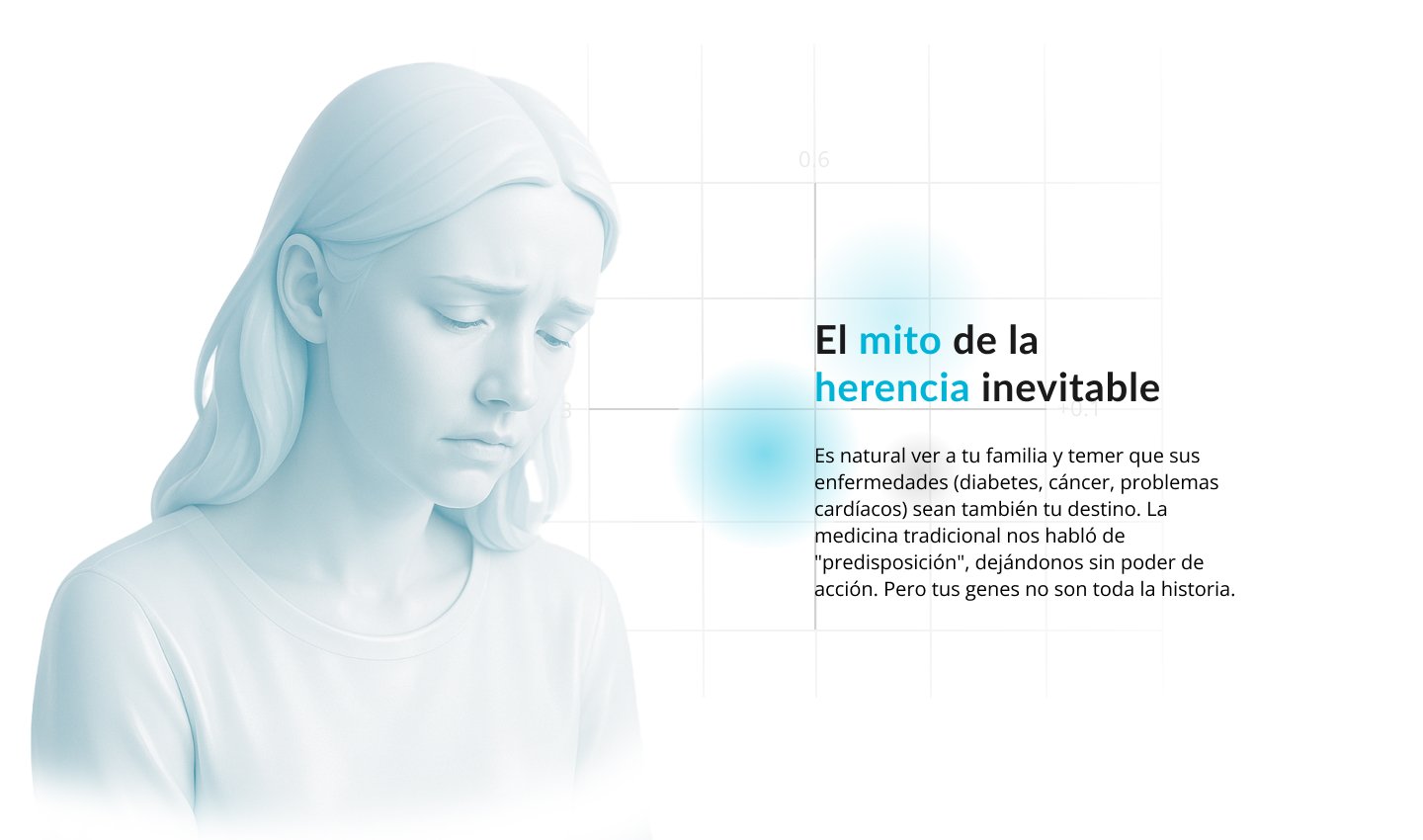
The Challenge: When the Message is Too Complex
The client arrived with a basic landing page. After a review, my diagnosis was clear: the core problem wasn’t visual, it was communication.
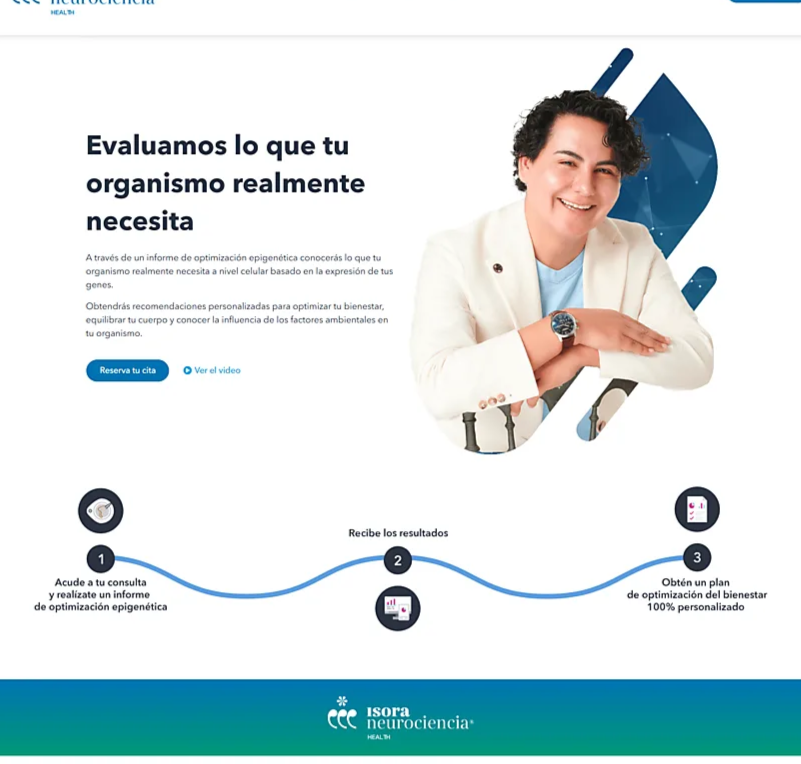
The site was full of scientific jargon and technical language that failed to connect with the audience. My strategic insight was that before designing a single line, we needed to solve the copy.
I proposed an “AI-Hybrid” workflow to deeply investigate the topic, rewrite the narrative, and design the full experience—optimizing both the client’s time and budget.
The Goal: Stop selling “epigenetics” and start selling “a healthy future.”
My Hybrid Process (Human + AI)
The client arrived with a basic landing page. After a review, my diagnosis was clear: the core problem wasn’t visual, it was communication.
1. Research & Synthesis (NotebookLM)
The first challenge was understanding a complex scientific subject like epigenetics.
- AI (Research Assistant): I used NotebookLM to process all the client’s material and dozens of research articles.
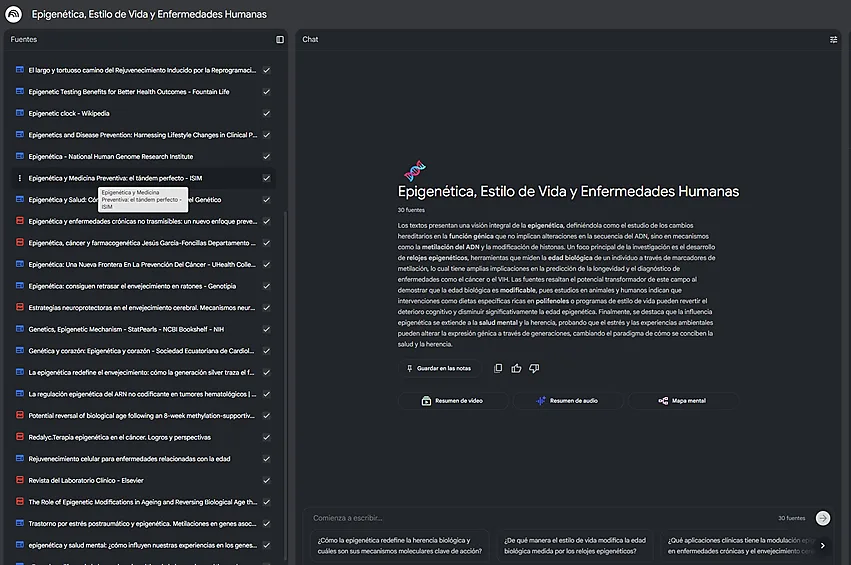
- Human (Strategist): My role was to ask the right questions and extract the key insight: the public didn’t understand the science, but they did understand analogies. (e.g., “Epigenetics is the switch that controls your genes”).
2. Copywriting & Storytelling (Gemini)
Armed with my insights and analogies, I moved on to creating the narrative.
- AI (Draft Generator): I used Gemini to generate a storytelling draft for the landing page, based on a strategic prompt that included the insight, the analogies, and concepts from the moodboard.
- Human (Editor & Copywriter): My job was to refine, edit, and polish the AI text to give it a unique, emotional, and human brand voice.
BEFORE (Client Text): “We optimize your epigenetic markers through DNA methylation analysis…”
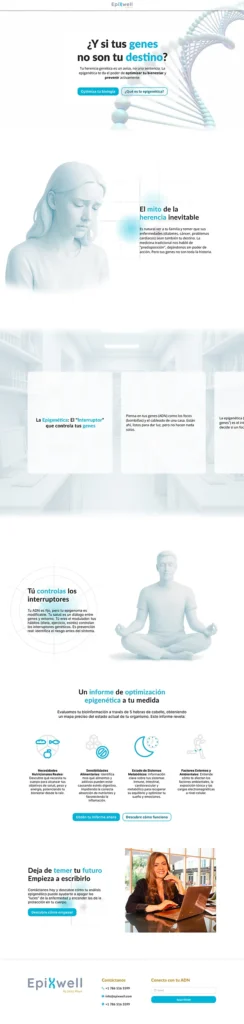
AFTER (Human + AI): “What if your genes aren’t your destiny? Your genetic heritage is a notice, not a sentence. Epigenetics gives you the power to optimize your well-being and actively prevent future issues.”

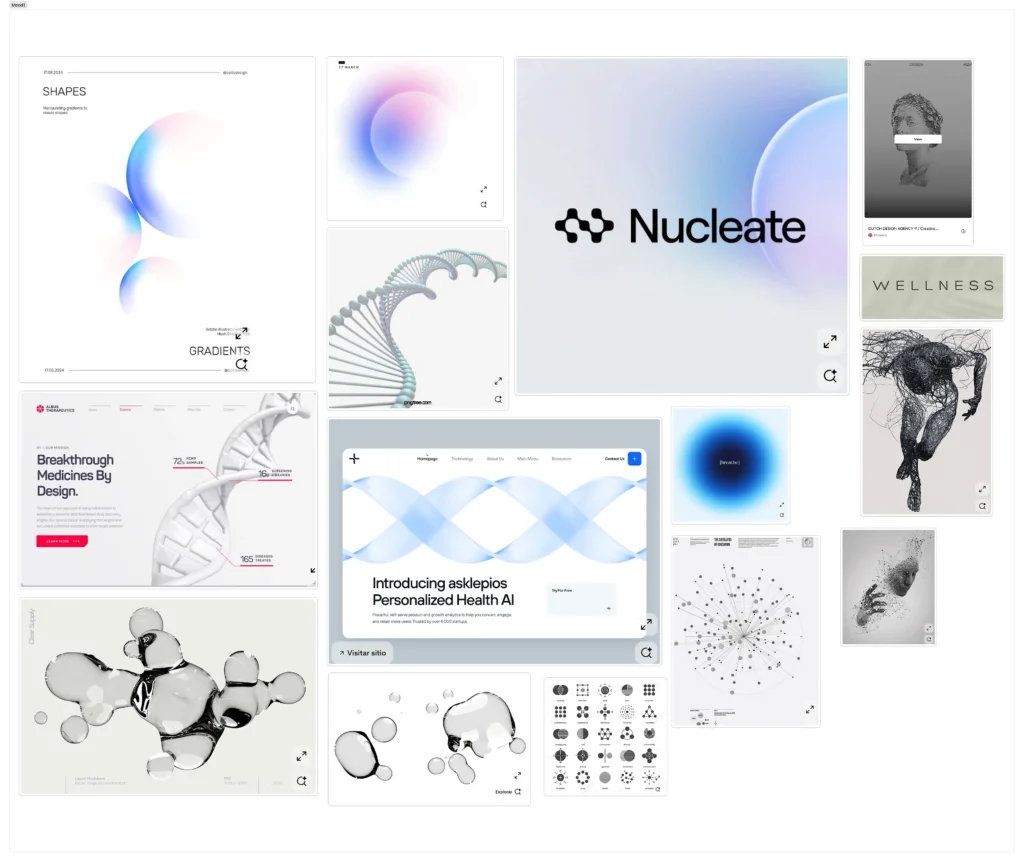
3. Visual Direction
I defined the brand’s emotional and visual direction with a moodboard centered on four key concepts: Future, Harmony, Well-being, and Health.
4. Structure & Flow
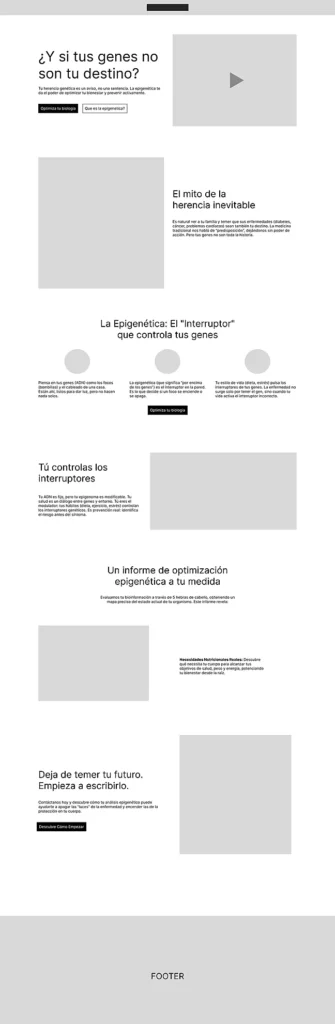
I translated the storytelling into a tangible digital structure using Figma. I developed medium-fidelity wireframes to precisely define visual hierarchy, content distribution, and spacing. This ensured the User Experience (UX) and the narrative worked in tandem before applying the final aesthetic layer.
5. The Design System
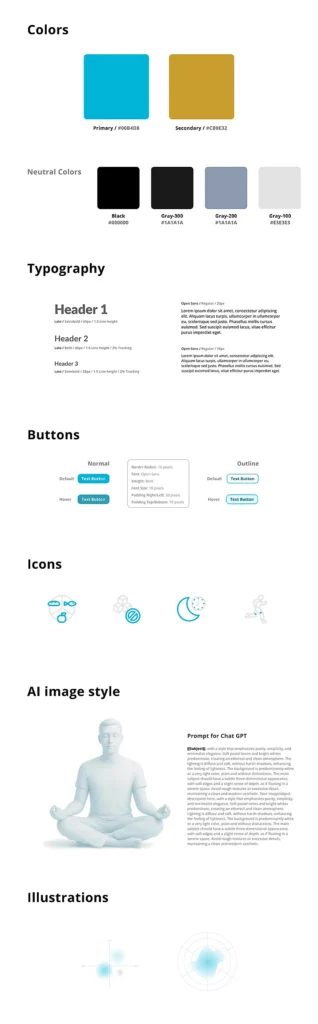
To ensure total consistency, I created an Essential Style Guide. This guide served as my “art direction prompt” for both the generative AI and my own illustrations.
6. Asset Creation (Humano + IA)
Here is where the hybrid approach comes to life:
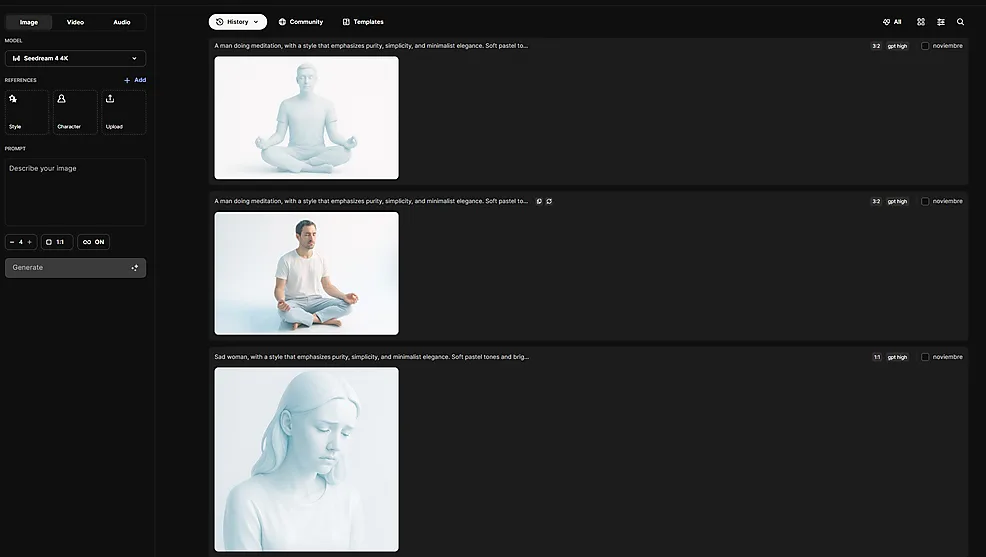
- AI (Art Assistant – ChatGPT): I used generative AI to create conceptual imagery.
- Human (Art Director): My role was Prompt Engineering. I iterated dozens of times to ensure every image was consistent with the moodboard and style guide.
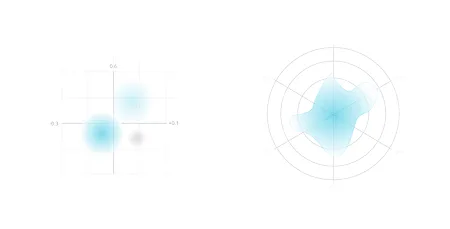
- Human (Illustrator): To give the brand a unique touch that AI couldn’t replicate, I designed a set of custom illustrations to accompany and simplify key concepts.
The Final Solution
The result is a cohesive landing page where storytelling (copy) + imagery (AI) + illustrations (human) work in perfect harmony. Each section guides the user through a persuasive story that translates complex science into a human promise of well-being.
Results & Value
The Result (Product): A landing page that transforms an intimidating scientific concept into a human, persuasive, and easy-to-understand story.
The Result (Business): The client received a high-quality sales tool that solved their main business problem (communication) in record time and with an optimized budget.
My Value Proposition: This project demonstrates how I utilize AI as a creative partner. My value as a designer is not just in execution, but in directing the strategy (the Why), guiding the tools (the How), and adding the human touch that creates a real connection.